
A failing retaining wall is one of those problems that starts small, then gets loud fast. One season it is a slight lean. Next season you are looking at cracked blocks, muddy runoff, and a slope that is trying to move.
In Pierce County, most retaining wall demolition projects start around $1,100 as a minimum. That minimum usually covers basic labor, equipment time, and disposal for a smaller job.
For many homeowners, total pricing lands in the $1,500 to $5,000 range. Smaller wood or block walls often land on the lower end. Taller, reinforced concrete walls, or walls in tight backyards tend to land on the higher end. The final number depends on the wall size, the material, how easy it is to reach, and what needs to happen after the wall comes out.
ding.
Average Retaining Wall Demolition Costs in Pierce County
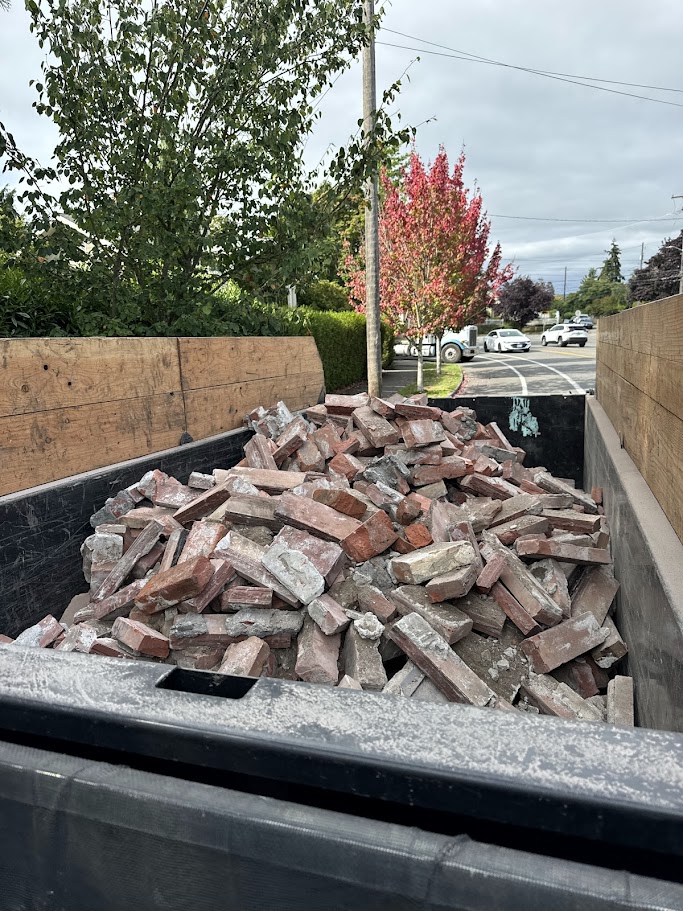
Franky’s Excavation handles retaining wall demolition across Pierce County, including removal, haul-off, and site cleanup. You’ll see how that pricing breaks down in the next section, plus what changes the quote the most on real properties.
One quick note before we get into numbers. “Demolish a retaining wall” can mean two different scopes.
- Demo only: The wall is removed and hauled away.
- Demo plus stabilization: The wall is removed, and the soil behind it is reshaped, compacted, and backfilled so you do not end up with a new slide or a new drainage problem.
Most homeowners end up needing some level of stabilization, even if it is basic backfill and gra
A retaining wall quote is not only about breaking the wall apart. It also includes moving heavy debris, loading it out, and paying disposal costs that add up fast with concrete, block, and soil.
In Pierce County, wall demolition pricing is usually shaped by three things: labor and equipment time, disposal weight, and what has to happen to the soil after the wall is gone. It also includes moving heavy debris, loading it out, and paying disposal costs that add up fast with concrete and soil.
National Averages vs. Pierce County Labor Rates
Labor in the Seattle to Tacoma region is often higher than national averages. That shows up in wages, insurance, and equipment costs.
Franky’s Excavation often sees working price ranges land around:
- $3 to $7 per square foot for many residential retaining walls
- $4 to $8 per square foot for commercial walls or reinforced structures
These are planning ranges, not a final quote. A quick look at material, access, and height is usually enough to tighten the number.
Also, keep in mind that square-foot pricing is most useful for the wall itself. The full project total can still move if the site needs backfill, grading, or drainage work.
Estimated Cost Per Square Foot
For most retaining walls, demo alone often budgets out around $3 to $8 per square foot. Reinforced concrete usually sits at the high end because it can take heavier equipment and more time.
Here are simple examples for demolition only:
- 100 sq ft wall: about $300 to $800
- 300 sq ft wall: about $900 to $2,400
That is for breaking and removing the wall sections. It does not include everything that may be needed behind the wall.
A more realistic way to budget is this. If the wall is holding back soil, plan on some level of backfill and shaping after demolition. That extra step is often what turns a “demo job” into a true “fix the problem” job.
Key Factors That Impact Your Demolition Quote
Franky’s Excavation knows that two walls can be the same size and still price out different. The main reasons are the material, the height, and how tight the work area is. In Pierce County, moisture and soil movement also play a part because saturated ground can slow equipment work.
Wall Material
Material changes both demo speed and disposal cost.
Wood walls are often faster to remove, but treated lumber can raise disposal fees because it cannot always be handled like clean yard waste.
Poured concrete walls usually take more force to break, so crews may use hydraulic breakers and heavier equipment. That increases machine time.
Block and masonry walls often fall between wood and poured concrete. They can take time to break down and load out clean, especially if the blocks are filled with concrete.
Material choice can shift pricing by $500 to $1,500, but the bigger swing is usually weight. Heavy walls cost more to haul and dump.
Site Accessibility and Equipment Access
Access is a big deal. If equipment can reach the wall, the job moves faster and cleaner. If the wall is in a tight backyard, behind fences, or down a slope, crews may need smaller equipment and more hand work.
Tight access can add about $500 to $2,000 in labor, depending on the layout and how far material has to be carried.
This is common in older neighborhoods, side yards, and properties with narrow gates. It is also common when the wall is close to a home, a shed, or a fence line where machines cannot swing freely.
Wall Height and Soil Pressure
Wall height matters because tall walls hold back more soil, and soil has weight and pressure, especially after rain.
Walls over 4 feet often need controlled, top-down removal so the soil behind the wall does not shift suddenly. Taller walls can add $1,000+ to a project because the crew has to remove the wall in safer stages and manage the soil as they go.
A wall can also be “short” but still risky if it is holding back a steep slope, a driveway edge, or a loaded area like a parking pad. That is where a site visit really matters.
Local Pierce County Costs for Disposal and Permits
Local disposal fees are a major driver for retaining wall demolition because concrete, block, and soil are heavy. Even a “small looking” wall can create a surprising amount of tonnage once it is broken up and loaded out.
Dumping Fees at Pierce County Facilities
Most projects include a disposal line item. Depending on the wall material and how much soil comes out with it, disposal commonly falls around $300 to $1,200.
Pierce County transfer station pricing can be around $191.65 per ton (plus applicable taxes and fees), and rates can change over time. The key point is weight. Concrete and soil are the big cost drivers.
Reinforced concrete can also take longer to break down, which can raise equipment time along with dump costs.
Most projects include a disposal line item. Depending on the wall material and how much soil comes out with it, disposal commonly falls around $300 to $1,200.
Concrete and soil are the big weight drivers. Reinforced concrete also takes longer to break down, which can raise equipment time along with dump costs.
Pierce County Permit Requirements for Walls 4 Feet and Taller
Permits around retaining walls can be confusing because the rule is not just “4 feet or not.” In many cases, walls not over 4 feet are exempt, but a permit may still be required if the wall is supporting a surcharge.
A surcharge is extra load near the wall, like a driveway, a parking area, a structure, or even a slope that pushes weight toward the wall.
As a planning range, permit costs can be around $200, but the exact number depends on the jurisdiction and what else is changing on site.
Franky’s Excavation can help confirm what applies to your property and handle the permit step so the project stays compliant.
Recycling and Environmental Considerations
When the material is clean, recycling can help reduce landfill fees. Concrete is a common example. Separating clean concrete from mixed debris can improve where it can be dropped and sometimes lowers the disposal portion of the bill.
This is also one reason crews like to keep soil separate when possible. Mixed loads tend to cost more to dispose of.
Additional Costs to Plan For
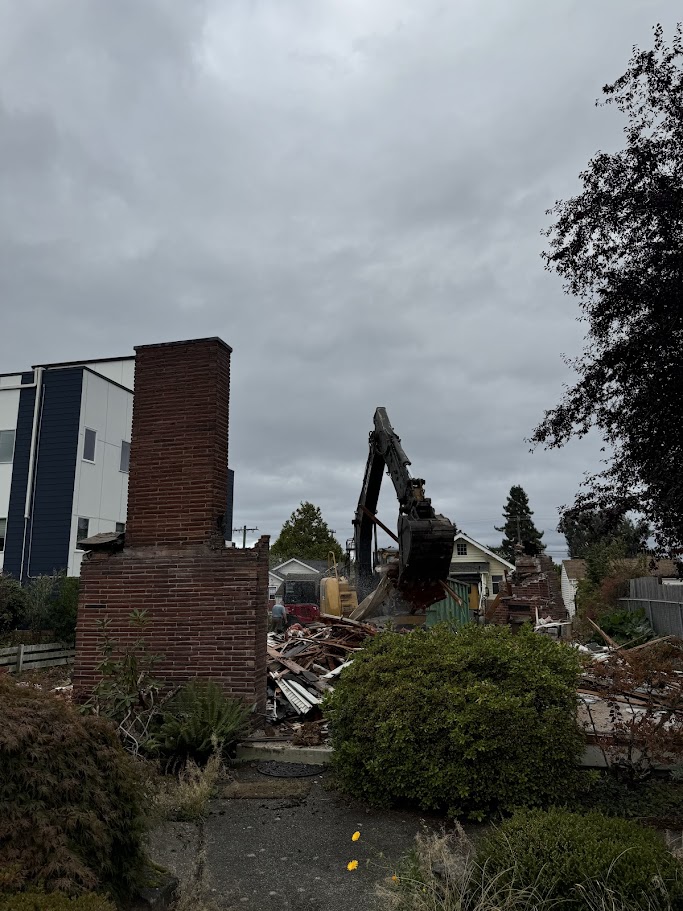
A retaining wall does more than “sit there.” It holds soil in place and often helps control water pressure. Once the wall is removed, the site still needs to be stable.
A lot of homeowners are surprised by this part. The wall might be the thing you see, but the soil behind it is the thing that causes the long-term problem.
Soil Stabilization and Backfilling
After demolition, the exposed area should be stabilized so it does not slump or wash out.
Most backfill and rough grading work commonly lands around $500 to $1,500, depending on how much material is needed and how tight the space is.
If the wall was holding a steep cut, you may need more material than expected. If the area is close to a home or driveway, compaction also matters more because settling can cause future cracking.
On slopes, structural fill or added compaction steps may be needed to keep the area safe.
Drainage and French Drain Replacement
If water pressure helped damage the wall, new drainage is a smart move. A wall can fail slowly for years from trapped water, then it finally gives up during heavy rain.
Drainage installation often ranges around $800 to $2,500, depending on layout, pipe run, and where the water is being directed.
In simple terms, drainage gives water a controlled path. Without it, the water finds its own path, and it usually goes through the weakest spot.
Utility Locates and 811 Coordination
Before digging or breaking near a wall, utilities should be located. Franky’s Excavation coordinates utility locates as part of safe planning.
Hitting a buried line can turn a demolition job into an emergency repair, so this is not a step to skip.
DIY vs. Professional Retaining Wall Demolition
DIY can work for very small landscape walls that are not holding meaningful soil. But once a wall is doing real retaining work, DIY gets risky fast.
The big difference is this. A professional crew is not only thinking about breaking material. They are also thinking about how the slope behaves during removal.
Safety Risks of DIY Demolition
Walls that hold soil can fail in sections and shift without much warning. Crews plan top-down removal, keep equipment positioned safely, and control where the soil goes as the wall is removed.
Real Cost of Equipment Rentals
DIY costs add up fast once you include rentals and disposal. Many homeowners end up paying for:
- Excavator rental (often $400 to $600 per day)
- Dump trailer rental (often $150 to $300)
- Disposal fees based on weight
DIY also tends to take longer, which increases rental days. And if the soil shifts or collapses, you can end up paying to fix a bigger problem than the original wall.
That is before you factor in your time, the learning curve, and the risk of damage to nearby areas.
Final Budget Expectations
Most residential retaining wall demolition projects in Pierce County fall into these general ranges:
- $1,500 to $3,000 for smaller wood or block walls
- $3,000 to $5,000 for larger, reinforced concrete walls
Protect Your Property Value with Professional Demolition
A failing wall can become a bigger problem during heavy Washington rain. If it is leaning, cracking, or bulging, it is usually telling you one thing, the pressure behind it is not being managed.
Getting it removed and stabilizing the area helps protect your yard, your slope, and nearby structures.
If you are selling in the near future, a bad wall can also raise questions during inspection, especially if it is near a driveway, a foundation edge, or a walkway. Getting it removed and stabilizing the area helps protect your yard, your slope, and nearby structures.
Get a Quote from Franky’s Excavation
The fastest way to get a tight number is a quick site visit. Franky’s Excavation looks at wall material, height, access, and what the soil is doing behind the wall, then prices the safest plan.
Contact us today to schedule a site evaluation and receive a clear, upfront demolition quote in Pierce County.