
Homeowners planning whole home demolition in Pierce County want clear pricing, simple explanations, and confidence in the next steps. Franky’s Excavation helps Pierce County residents remove old, unsafe, or outdated homes so they can rebuild with a clean slate.Average Cost of Whole Home Demolition
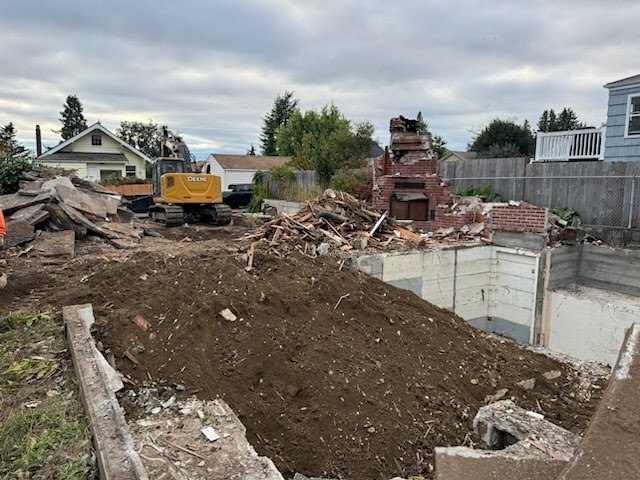
Average Cost of Whole Home Demolition in Pierce County
The cost of tearing down an entire home depends on size, materials, hazardous elements, and site conditions. These average cost numbers are based off of 4 years of home demolition projects done by Franky’s Excavation in Pierce County. They fall between $6,000 and $25,000+, with many standard homes landing between $15,000 and $21,000.
You have to factor in permits & asbestos testing into the pricing. Demolition permits in Pierce County cost around $200+ and the asbestos testing can range from $200+ to $400
In Pierce County, pricing typically ranges from $4 to $10 per square foot, though some projects may fall between $2 and $17 depending on complexity.
Cost by Home Size
| Home Size | Typical Cost Range |
|---|---|
| 1,000 sq ft | $6,000–$11,000 |
| 1,500 sq ft | $8,000–$17,000 |
| 2,000 sq ft | $8,000–$25,000+ |
This pricing includes disposal of the debris.
Key Factors Affecting Home Demolition Costs
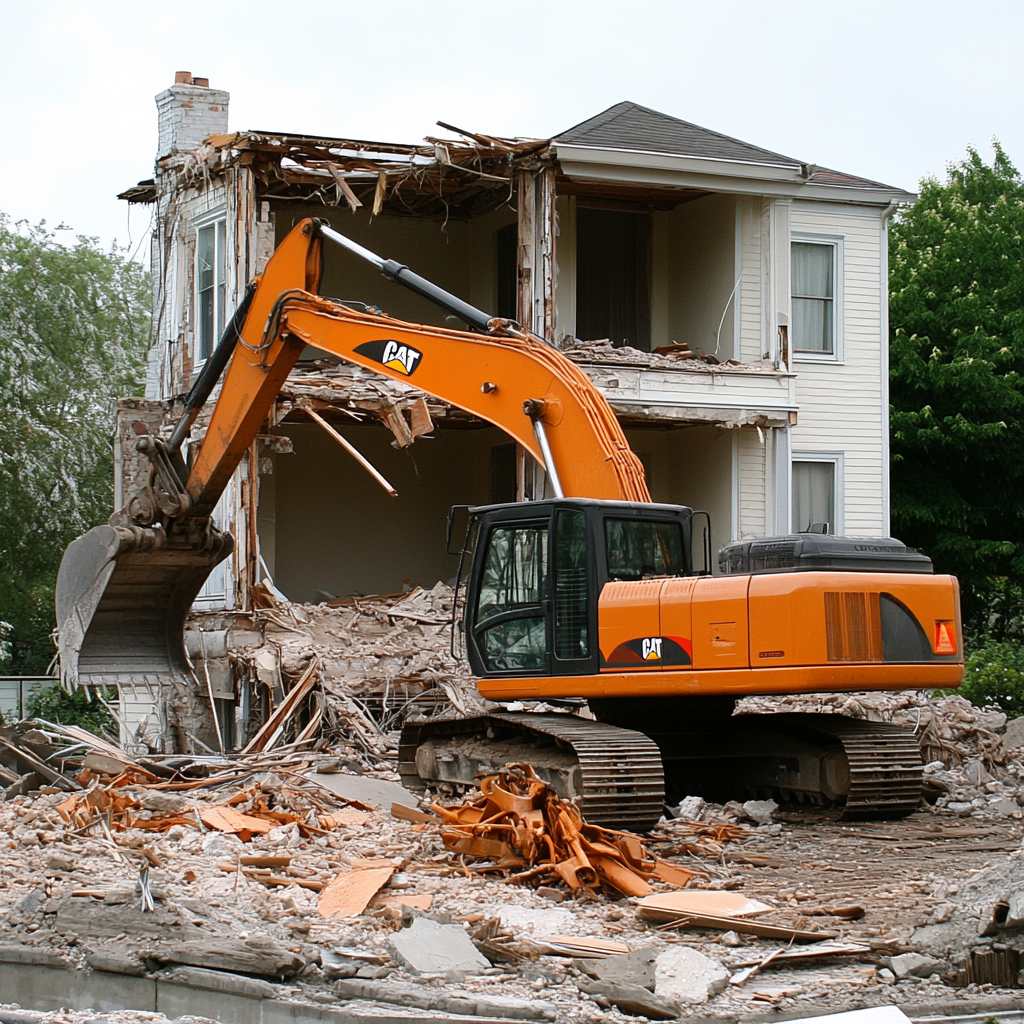
Several elements shape the final price of a demolition project. Each home brings its own mix of challenges, materials, and labor needs, so costs can shift quickly depending on what the crew finds on site.
Square Footage
The size of the home is one of the strongest predictors of cost. More square footage means more walls to break down, more debris to haul, and more time spent operating heavy equipment.
What this affects:
- Total debris volume
- Number of machine hours
- Labor time for cleanup
- Hauling and disposal fees
A small rambler can be cleared quickly, while a multi‑level home may require staged demolition and careful sequencing. The size of the home is one of the strongest predictors of cost. More square footage means more walls to break down, more debris to haul, and more time spent operating heavy equipment. A small rambler can be cleared in a short window, while a multi‑level home may require staged demolition and careful sequencing.
Construction Materials
The materials used to build the home make a big difference. Wood‑framed structures come down quickly, while brick or reinforced concrete slow the pace and require stronger equipment.
Key material-related cost impacts:
- Concrete and brick require heavier machinery
- Reinforced steel takes longer to cut and break
- Older homes may contain hazardous materials
- Mixed‑material homes require more sorting during disposal
If the home contains asbestos, lead paint, or other hazards, certified removal is required before demolition can begin. The materials used to build the home make a big difference. Wood‑framed structures come down quickly, while brick or reinforced concrete slow the pace and require stronger equipment. If the home contains asbestos, lead paint, or other hazardous materials, certified removal is required before demolition can begin, adding cost and time.
Location and Access
Where the home sits on the property can affect the entire project. Homes squeezed between neighbors, next to businesses, or on steep terrain may limit equipment movement.
Access challenges that raise costs:
- Narrow driveways or tight lot lines
- Limited equipment maneuvering space
- Steep or uneven grades
- Nearby structures requiring dust or vibration control
In tight areas, crews may need smaller machines or partial manual teardown, which increases labor hours. Where the home sits on the property can affect the entire project. Homes squeezed between neighbors, next to businesses, or placed on steep lots may limit equipment movement. In these cases, crews may need smaller machines or even manual teardown methods, which increase labor hours and overall cost.
Foundation or Basement Removal
Some demolitions stop at removing the structure itself, while others include full foundation removal.
This adds cost when:
- Concrete slabs are thick and reinforced
- Old basements require excavation
- Footings extend deep into the soil
- Extra hauling is needed due to heavy debris
Breaking up a slab or digging out a basement requires added equipment time and raises disposal weight. Some demolitions stop at removing the structure itself, while others include full foundation removal. Breaking up a thick slab or digging out a basement requires additional equipment time and increases debris weight, which raises disposal fees.
Demolition Type
Your goals shape the demolition method used.
Mechanical demolition:
- Fastest and most affordable
- Ideal for most standard homes
- Uses excavators and heavy equipment
Deconstruction:
- Materials removed by hand for reuse
- Slower and more expensive
- Can offer tax benefits for donated salvage
Partial demolition:
- Removes only a section of the home
- Requires structural planning
- More expensive per square foot due to precision needs Your goals shape the type of demolition used. Mechanical demolition is the fastest and most affordable, ideal for most homeowners. Deconstruction takes the home apart by hand to salvage materials for reuse or donation. It costs more but can offer tax benefits. Partial demolition focuses on removing one section of the home, such as an old addition or damaged area. This method is more complex and typically more expensive per square foot because it requires careful structural planning.
Permit Fees and Local Regulations in Pierce County
Before starting any full or partial demolition, a demolition permit is required. In Pierce County, that fee usually runs about $156.50, which includes a flat fee plus a state surcharge. But the permit itself is just the start.
Homeowners often need to submit:
- A notarized application
- A site plan showing what will be demolished
- Proof of legal ownership or authority to demolish
- A structural report (for partial demolitions)
If the demolition may affect the environment, you might need a SEPA environmental review, especially for larger properties. And don’t forget: all utilities, water, sewer, electric, and gas, need to be properly capped or disconnected before work can begin. Missing any of these steps can result in fines or project delays.
Home Demolition Process Overview
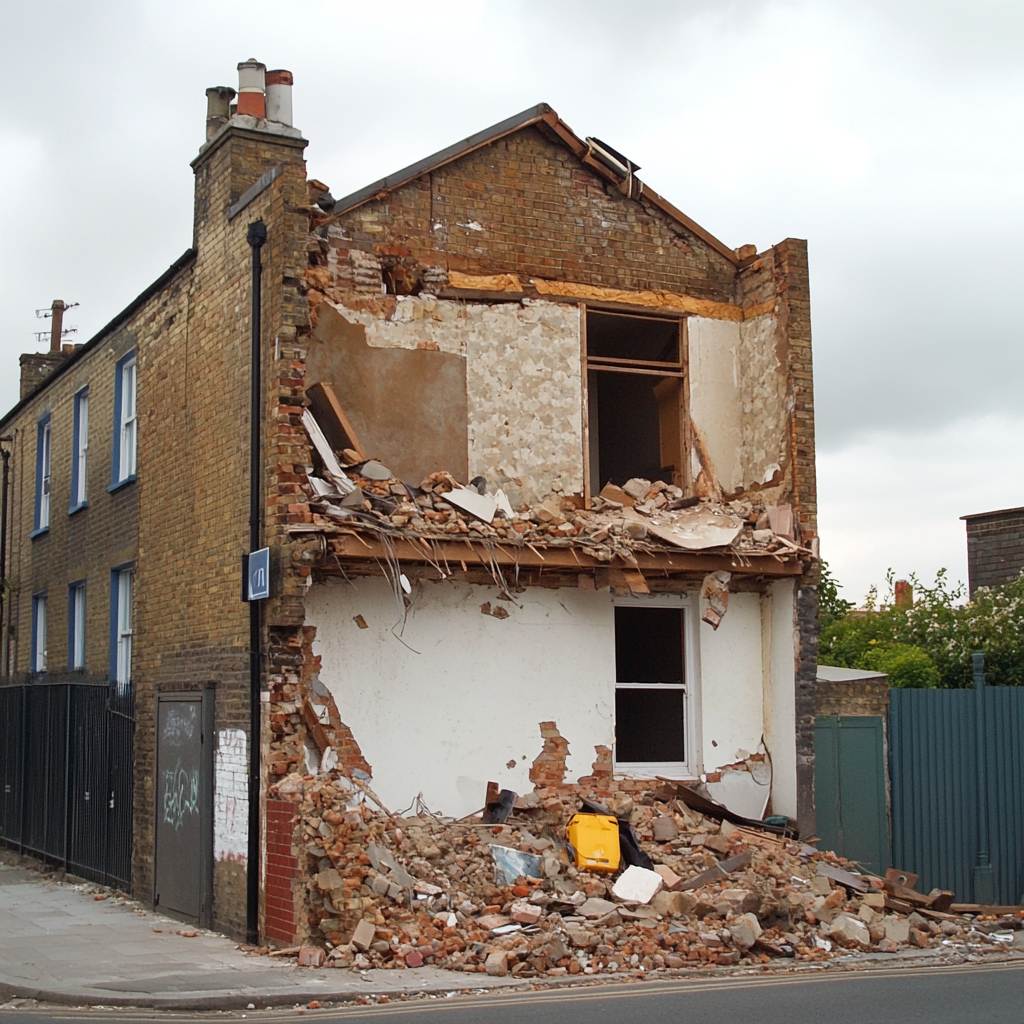
A typical Pierce County home demolition includes:
- Inspection: Checking for hazards, structural concerns, and access limits.
- Permits: Franky’s Excavation assists with all required applications.
- Utility Disconnects: Safe termination of all service lines.
- Demolition: Mechanical or deconstruction, depending on project goals.
- Debris Removal: Sorting, recycling, and proper disposal.
- Site Grading: Preparing the land for future construction
Deconstruction vs. Demolition of a House
Deconstruction
- Materials preserved for reuse
- Labor-heavy and slow
- Often double the cost of mechanical demolition
- Potential tax deductions for donated salvage
Mechanical Demolition
- Fastest and most cost-effective
- Best for homes without significant salvage value
- Most common choice in Pierce County
Real Project Cost Examples
- 1,500 sq ft home (Pierce County): $6,000–$15,000 for mechanical demolition
- 2,000 sq ft home with salvage options: $10,000–$50,000 for full deconstruction
Homes with hazardous materials, difficult access, or foundation removal may exceed typical ranges.
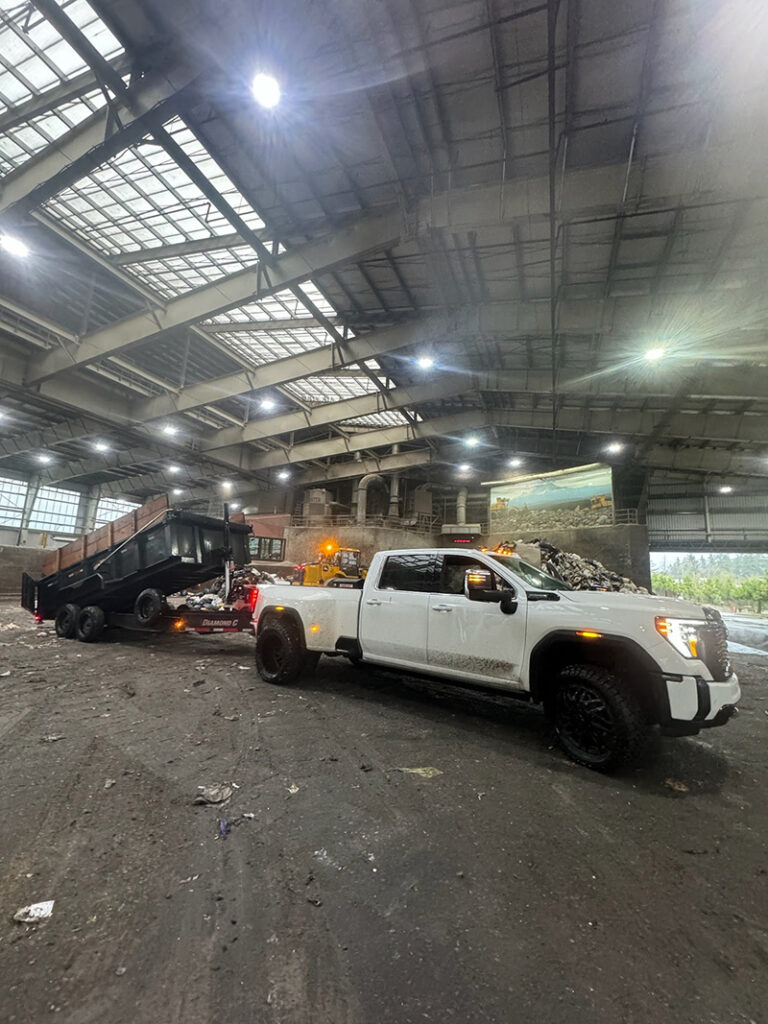
Franky’s Excavation brings local expertise, straightforward communication, and full permitting support. Their team understands Pierce County regulations, utility procedures, and disposal rules, making the process smoother for homeowners.
Contact Us to get your local quote to get started and move forward with a clean slate.